Nuala Gallagher keeps her sheep and her loom twenty metres apart
The undyed wool throw in our shop starts as a fleece in July and ends as a blanket in October. We spent four days in a Donegal yard watching the part in the middle.
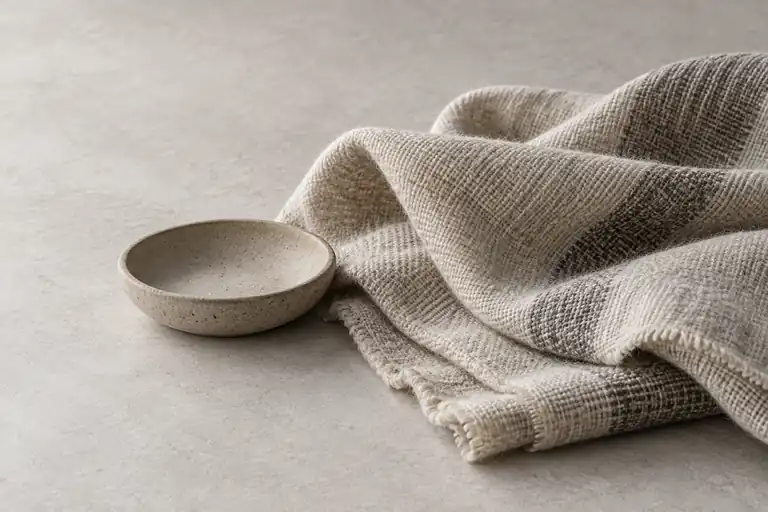
A fleece the colour of the sheep
Nuala Gallagher has sixty-one ewes, a hand-frame knitting machine older than she is, and one rule: nothing gets dyed. The grey comes from the grey sheep, the cream from the cream ones, and the brown from a ram called Tuesday who nobody can remember naming.
She sells what the flock gives her, which means a bad summer shows up in the colour. Last year the Oat throws ran slightly yellow because the grass did. Lowfield took them anyway. We would rather explain a yellow than carry a dye.
If you want the finished article, the undyed wool throw is in the shop. The rest of this is how it gets there.
Four days from fleece to throw
A throw is not hard to make; it is slow to make well. Nuala works in short runs of twelve so that every blanket gets a day of her attention rather than a minute of a machine’s.
| Stage | She is watching for | Hours |
|---|---|---|
| Day one: skirting and washing | Burrs, and any fleece that still smells of the field | 6 |
| Day two: carding and spinning | An even thread, because the knitting shows every lump | 9 |
| Day three: knitting on the frame | Dropped stitches, caught early or never | 11 |
| Day four: washing, blocking, drying | Shrinkage, and rain through the open door | 4 |
What goes into one throw
- About 4.2 kg of raw fleece, which washes down to a little over 2 kg of clean wool.
- Roughly 1,900 metres of two-ply yarn, spun on the farm.
- Eleven hours on the frame, most of it standing.
- A night laid flat on the long table in the shed, because it is the only flat surface big enough.
The damp problem
Wool dried too fast goes stiff, and wool dried too slowly goes sour. The shed has no heating, so the throws dry on racks Nuala built from old pallets, and she opens and closes the door by the hour.

The other end of the round
Lowfield collects from Nuala on Thursdays. The van then goes north of England to Hollin Pottery, which fires on Wednesdays and leaves the bowls to cool overnight, and on to Corrib Lights in Galway for lamp shades. Everything ends up at the studio on Quay Street.
“If the wool comes back the wrong grey, that is the grey. I would rather explain a grey than a dye.”
The round works because none of the makers is in a hurry. Each piece is packed at the studio in paper, card and the offcuts from Nuala’s wool, and nothing ships until all of it has arrived and been looked at.
What changes next year
Nuala is adding nine ewes in spring, which should lift a run from twelve throws to fifteen. She will not buy a second frame. Her reasoning is simple: with two, she would stop standing next to the work.
Keep reading: the autumn edit, photographs from the yard, the Arc lamp, or back to the home page.
More from the Journal
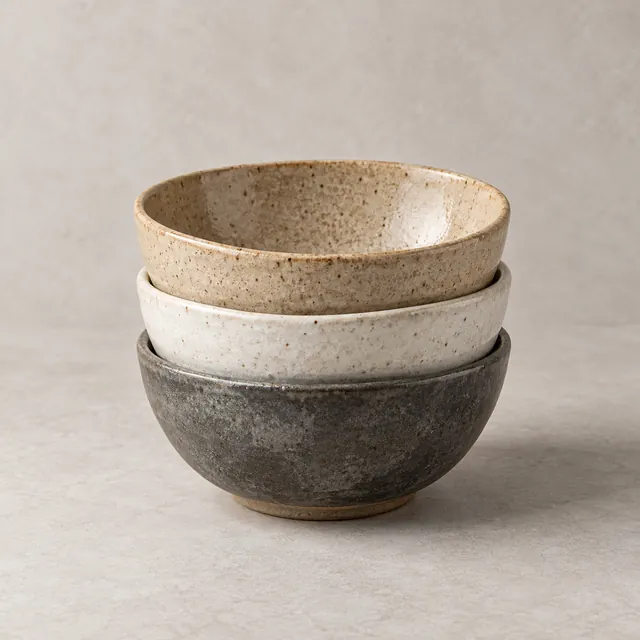
Why Hollin Pottery glazes three bowls three ways and sells them as a set
Six minutes · Ceramics
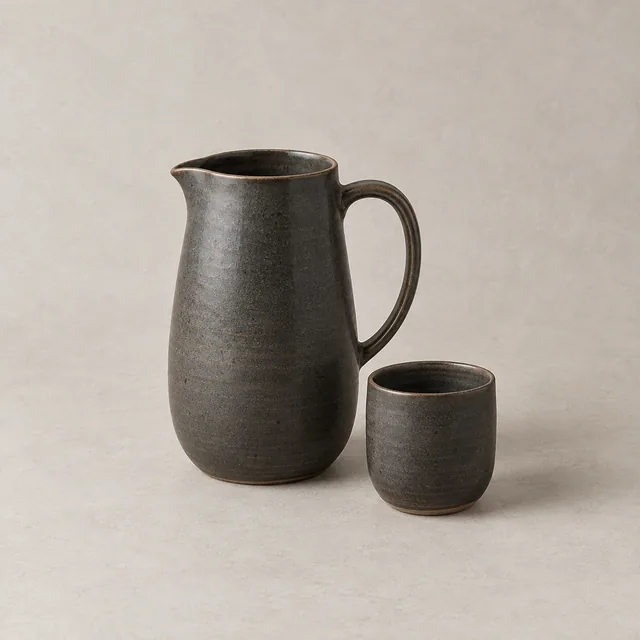
The jug that took eleven attempts to pour without dripping
Four minutes · Design
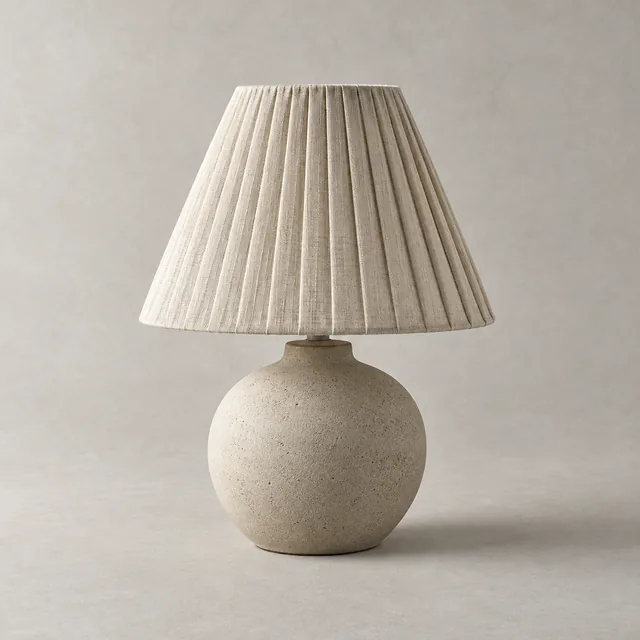
Wiring a lamp in Galway: a day with Corrib Lights
Nine minutes · Lighting